Notable Places to Visit
Discover the best of Bulgaria while attending ITTMEE 2026
Rila Monastery
Day Trip: Rila Monastery (UNESCO World Heritage Site)
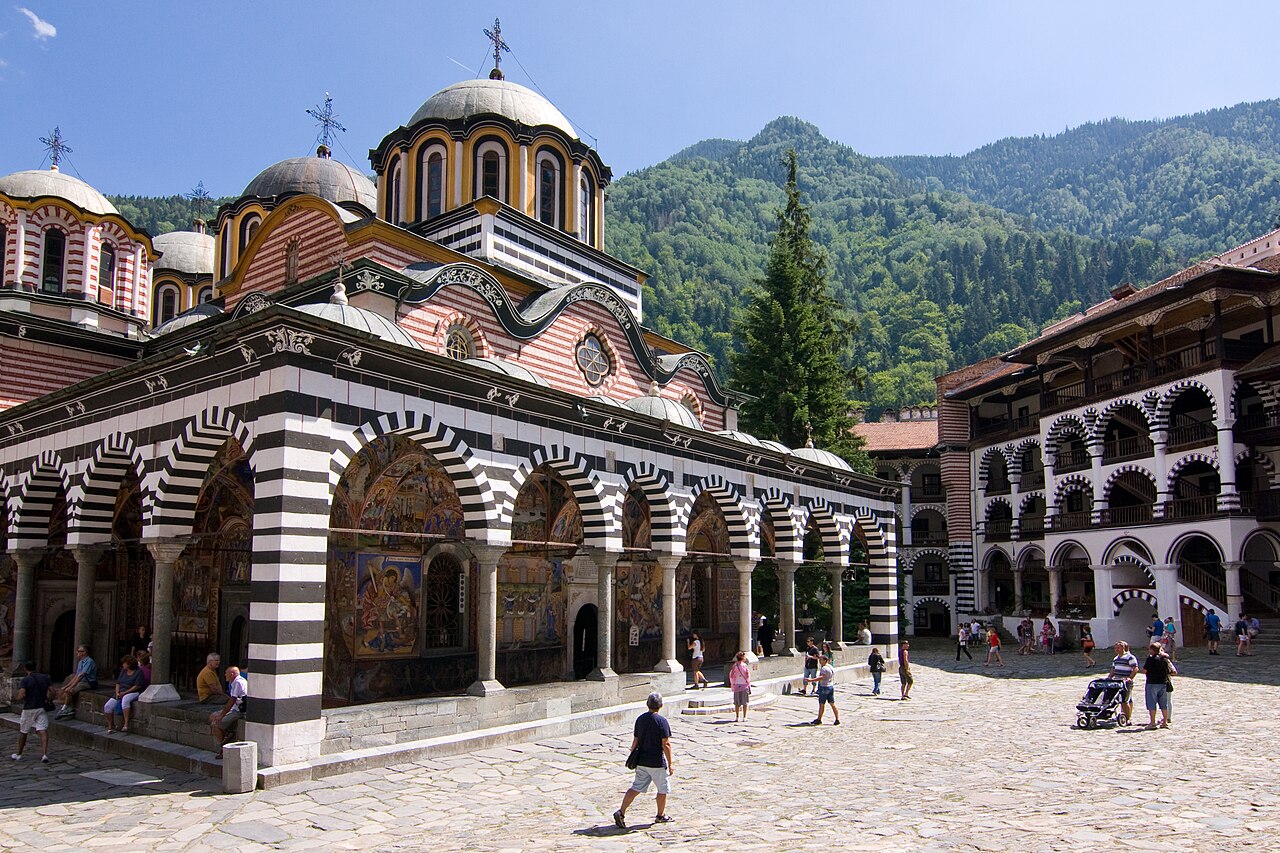
Rila Monastery, located approximately 120 kilometres south of Sofia in the heart of the Rila Mountains, is the largest and most famous Eastern Orthodox monastery in Bulgaria, and an enduring symbol of Bulgarian cultural identity and spiritual heritage. Founded in the 10th century by the hermit Saint John of Rila, the monastery has been a centre of Bulgarian culture, education, and spirituality for over a thousand years, playing a crucial role in preserving the Bulgarian language and national identity during five centuries of Ottoman rule. The current monastery complex, largely rebuilt in the mid-19th century after a devastating fire, features striking striped arches, colourful exterior frescoes depicting biblical scenes in vivid detail, a towering medieval defence tower from the 14th century, and a church interior adorned with a magnificent gilded iconostasis. Inscribed as a UNESCO World Heritage Site in 1983, the monastery sits in a breathtaking natural setting surrounded by dense pine forests and towering mountain peaks. The drive from Sofia takes approximately 2 to 2.5 hours and passes through spectacular mountain scenery, making the journey itself part of the experience. Visitors can explore the monastery museum, which houses a remarkable cross carved by monk Raphael over 12 years with miniature biblical scenes containing over 600 tiny figures, visible only with a magnifying glass. Learn more about Rila Monastery
Plovdiv
Plovdiv, Bulgaria's second-largest city, is one of the oldest continuously inhabited cities in Europe with over 6,000 years of history. Located approximately 150 km southeast of Sofia (about 1.5 hours by car or train), it was the European Capital of Culture in 2019. Built across seven hills along the banks of the Maritsa River, Plovdiv is a captivating blend of ancient Thracian, Roman, Byzantine, Ottoman, and Bulgarian Revival heritage, all coexisting harmoniously with a vibrant contemporary arts scene, trendy cafes, and a buzzing nightlife. The city's compact historic centre is easily explored on foot, and its warm, welcoming atmosphere and slower pace of life make it a perfect day trip or overnight excursion from Sofia during your time at ITTMEE 2026.

Ancient Roman Theatre of Philippopolis
The Ancient Roman Theatre of Philippopolis is one of the best-preserved ancient Roman theatres in the world and unquestionably Plovdiv's most famous landmark. Dating back to the reign of Emperor Trajan in the late 1st century AD, this magnificent open-air theatre was carved into the natural slope between two of Plovdiv's seven hills and could originally seat between 5,000 and 7,000 spectators. Remarkably, the theatre remained buried and forgotten for centuries until it was accidentally rediscovered during a construction project in 1972. Since its careful excavation and restoration, it has been returned to active use and now hosts a full programme of opera performances, concerts, theatrical productions, and cultural festivals throughout the summer months, offering audiences the unforgettable experience of enjoying live performances in a 2,000-year-old setting. The semicircular rows of white marble seats rise in perfect symmetry, and from the upper tiers, spectators are treated to breathtaking panoramic views of the Rhodope Mountains and the modern city below. A visit here, whether for a performance or simply to admire the architecture, is an absolute highlight of any trip to Plovdiv. Learn more about the Ancient Roman Theatre

Old Town (UNESCO World Heritage tentative list)
Plovdiv's Old Town is a living museum perched atop three of the city's seven hills, where winding cobblestone streets lead past beautifully preserved Bulgarian National Revival houses from the 18th and 19th centuries, their ornate facades decorated with colourful murals, elaborate woodcarvings, and distinctive overhanging upper floors known as "chardaks." The area has been nominated for UNESCO World Heritage status and represents one of the finest ensembles of Revival-period architecture in the Balkans. Among the most notable houses are the Balabanov House, now used as a cultural centre and art gallery; the Hindliyan House, a wealthy Armenian merchant's residence with lavish painted wall decorations depicting scenes from Venice and Constantinople; and the Ethnographic Museum, housed in the magnificent Kuyumdzhioglu House, which contains over 40,000 items documenting traditional Bulgarian life. As you wander through the Old Town's narrow lanes, you will also encounter ancient Roman walls, Ottoman mosques, Bulgarian churches, and contemporary art galleries side by side, creating a unique architectural tapestry that spans more than two millennia. The Old Town is best explored on foot, with plenty of atmospheric cafes and restaurants tucked into historic courtyards where you can pause to soak in the timeless ambiance. Learn more about Plovdiv's Old Town

Roman Stadium of Philippopolis
Beneath Plovdiv's main pedestrian shopping street lies one of the most fascinating archaeological sites in Europe: the ancient Roman Stadium of Philippopolis, modelled after the famous stadium at Delphi in Greece. Built in the 2nd century AD during the reign of Emperor Hadrian, this massive structure was originally 240 metres long and 50 metres wide, capable of seating approximately 30,000 spectators who came to watch athletic competitions, chariot races, and gladiatorial games. Today, only the curved northern end of the stadium is visible, dramatically exposed beneath the modern street level at the junction of Knyaz Alexander I Street and Dzhumaya Square, where it sits alongside the 14th-century Dzhumaya Mosque in an extraordinary juxtaposition of ancient and medieval monuments. Visitors can descend to the excavated level via a staircase to get a close-up view of the surviving marble seats and architectural details, and an informative display helps visitors understand the full scale and significance of the original structure. The Roman Stadium is a remarkable testament to Plovdiv's importance as a major city in the Roman Empire and offers a tangible connection to the ancient world right in the heart of the modern city centre. Learn more about the Roman Stadium
Kapana Creative District
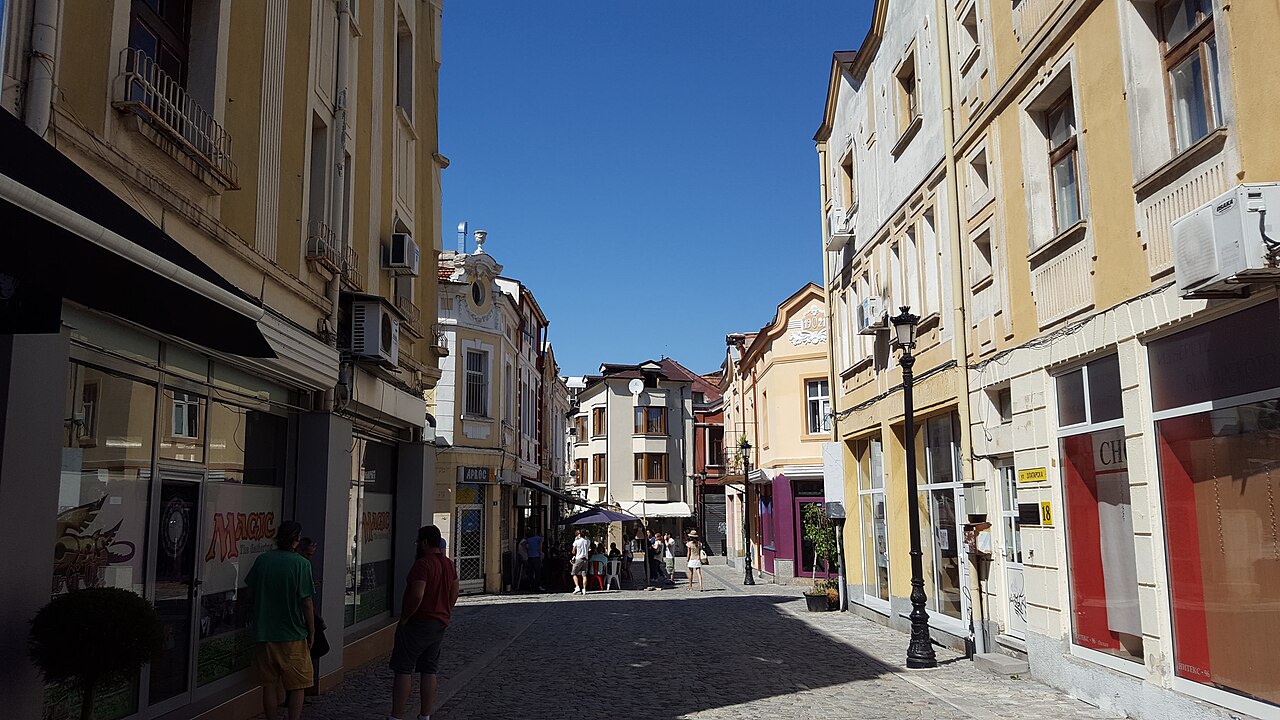
Kapana, which translates to "The Trap" in Bulgarian (named for its maze-like network of narrow streets where it was said to be easy to get lost), is Plovdiv's most vibrant and trendy neighbourhood and a shining example of successful urban regeneration. For centuries this compact quarter was home to small artisans and craftsmen, each street traditionally dedicated to a specific trade, from tailors and coppersmiths to shoemakers and dyers, a heritage still reflected in the old street names. In recent years, the neighbourhood has been completely transformed into a thriving creative district filled with independent cafes, craft beer bars, art galleries, vintage boutiques, design studios, and some of the city's best restaurants, all housed in charmingly restored historic buildings. The streets themselves have become an open-air gallery, with large-scale murals and street art installations by Bulgarian and international artists covering many of the building facades. Kapana regularly hosts cultural events, food festivals, live music performances, and night markets that bring together locals and visitors in a wonderfully relaxed and convivial atmosphere. It is the perfect neighbourhood to spend an evening exploring, sampling Bulgarian craft beers and wines, and enjoying the creative energy that has made Plovdiv one of Europe's most exciting cultural destinations. Learn more about Kapana

Nebet Tepe
Nebet Tepe is the highest of Plovdiv's seven hills and the site of the city's oldest known settlement, with archaeological evidence of continuous habitation dating back to the Neolithic period, approximately 6,000 years ago. The hill was later fortified by the Thracians, who established a stronghold called Eumolpias here, and subsequently by Philip II of Macedon, who renamed the city Philippopolis in 342 BC. The massive stone walls and defensive towers visible today are remains of fortifications that were built, rebuilt, and expanded over the course of many centuries by Thracians, Macedonians, Romans, Byzantines, and Ottomans. Today Nebet Tepe is one of Plovdiv's most beloved spots, offering unobstructed 360-degree panoramic views of the entire city, the Thracian Plain stretching to the horizon, and the distant ridgeline of the Rhodope Mountains. The hilltop is a popular gathering place, especially in the late afternoon and evening when locals and visitors alike come to watch spectacular sunsets from the ancient walls. The climb to the top through the Old Town's winding cobblestone streets is a pleasant walk that passes many of Plovdiv's most beautiful Revival-era houses, and the sense of standing on a spot that has been continuously inhabited for six millennia is profoundly moving. Learn more about Nebet Tepe

Tsar Simeon Garden & Singing Fountains
Tsar Simeon Garden is Plovdiv's largest and most beautiful central park, originally designed in 1892 by the renowned Swiss landscape architect Lucien Chevallaz and later expanded in the early 20th century. Named after Tsar Simeon I of Bulgaria, the park is a wonderful green oasis in the heart of the city, featuring mature trees, manicured flower beds, shaded pathways, ornamental bridges, a small lake, and numerous benches where locals relax throughout the day. The park's centrepiece and most famous attraction is the Singing Fountains, a spectacular choreographed light and water show set to music that takes place on summer evenings from Thursday to Saturday. The fountains were originally installed in 1984 and have undergone several upgrades to incorporate modern LED lighting and an expanded musical repertoire, creating a mesmerising display that draws large crowds of families and visitors. The surrounding area of the park is dotted with pleasant open-air cafes and ice cream vendors, making it the perfect spot for a relaxing afternoon break or a pre-dinner stroll. The garden is located a short walk south of the Old Town and is also home to the Natural History Museum, making it easy to combine a visit with other Plovdiv attractions. Learn more about Tsar Simeon Garden
Getting to Plovdiv from Sofia
Plovdiv is easily accessible from Sofia by train (approximately 2 to 2.5 hours, with frequent departures from Sofia Central Railway Station) or by bus (approximately 2 hours, with services running every 30 minutes from the Sofia Central Bus Station). Rental cars are also a convenient option for exploring the surrounding countryside and the scenic Rhodope Mountains at your own pace. The drive between Sofia and Plovdiv takes approximately 1.5 hours via the Trakia motorway.
For more information about visiting Plovdiv, check the official tourism portal: visitplovdiv.com
Rila Monastery
Day Trip: Rila Monastery (UNESCO World Heritage Site)
Rila Monastery, located approximately 120 kilometres south of Sofia in the heart of the Rila Mountains, is the largest and most famous Eastern Orthodox monastery in Bulgaria, and an enduring symbol of Bulgarian cultural identity and spiritual heritage. Founded in the 10th century by the hermit Saint John of Rila, the monastery has been a centre of Bulgarian culture, education, and spirituality for over a thousand years, playing a crucial role in preserving the Bulgarian language and national identity during five centuries of Ottoman rule. The current monastery complex, largely rebuilt in the mid-19th century after a devastating fire, features striking striped arches, colourful exterior frescoes depicting biblical scenes in vivid detail, a towering medieval defence tower from the 14th century, and a church interior adorned with a magnificent gilded iconostasis. Inscribed as a UNESCO World Heritage Site in 1983, the monastery sits in a breathtaking natural setting surrounded by dense pine forests and towering mountain peaks. The drive from Sofia takes approximately 2 to 2.5 hours and passes through spectacular mountain scenery, making the journey itself part of the experience. Visitors can explore the monastery museum, which houses a remarkable cross carved by monk Raphael over 12 years with miniature biblical scenes containing over 600 tiny figures, visible only with a magnifying glass. Learn more about Rila Monastery
Plovdiv
Plovdiv, Bulgaria's second-largest city, is one of the oldest continuously inhabited cities in Europe with over 6,000 years of history. Located approximately 150 km southeast of Sofia (about 1.5 hours by car or train), it was the European Capital of Culture in 2019. Built across seven hills along the banks of the Maritsa River, Plovdiv is a captivating blend of ancient Thracian, Roman, Byzantine, Ottoman, and Bulgarian Revival heritage, all coexisting harmoniously with a vibrant contemporary arts scene, trendy cafes, and a buzzing nightlife. The city's compact historic centre is easily explored on foot, and its warm, welcoming atmosphere and slower pace of life make it a perfect day trip or overnight excursion from Sofia during your time at ITTMEE 2026.
Ancient Roman Theatre of Philippopolis
The Ancient Roman Theatre of Philippopolis is one of the best-preserved ancient Roman theatres in the world and unquestionably Plovdiv's most famous landmark. Dating back to the reign of Emperor Trajan in the late 1st century AD, this magnificent open-air theatre was carved into the natural slope between two of Plovdiv's seven hills and could originally seat between 5,000 and 7,000 spectators. Remarkably, the theatre remained buried and forgotten for centuries until it was accidentally rediscovered during a construction project in 1972. Since its careful excavation and restoration, it has been returned to active use and now hosts a full programme of opera performances, concerts, theatrical productions, and cultural festivals throughout the summer months, offering audiences the unforgettable experience of enjoying live performances in a 2,000-year-old setting. The semicircular rows of white marble seats rise in perfect symmetry, and from the upper tiers, spectators are treated to breathtaking panoramic views of the Rhodope Mountains and the modern city below. A visit here, whether for a performance or simply to admire the architecture, is an absolute highlight of any trip to Plovdiv. Learn more about the Ancient Roman Theatre
Old Town (UNESCO World Heritage tentative list)
Plovdiv's Old Town is a living museum perched atop three of the city's seven hills, where winding cobblestone streets lead past beautifully preserved Bulgarian National Revival houses from the 18th and 19th centuries, their ornate facades decorated with colourful murals, elaborate woodcarvings, and distinctive overhanging upper floors known as "chardaks." The area has been nominated for UNESCO World Heritage status and represents one of the finest ensembles of Revival-period architecture in the Balkans. Among the most notable houses are the Balabanov House, now used as a cultural centre and art gallery; the Hindliyan House, a wealthy Armenian merchant's residence with lavish painted wall decorations depicting scenes from Venice and Constantinople; and the Ethnographic Museum, housed in the magnificent Kuyumdzhioglu House, which contains over 40,000 items documenting traditional Bulgarian life. As you wander through the Old Town's narrow lanes, you will also encounter ancient Roman walls, Ottoman mosques, Bulgarian churches, and contemporary art galleries side by side, creating a unique architectural tapestry that spans more than two millennia. The Old Town is best explored on foot, with plenty of atmospheric cafes and restaurants tucked into historic courtyards where you can pause to soak in the timeless ambiance. Learn more about Plovdiv's Old Town
Roman Stadium of Philippopolis
Beneath Plovdiv's main pedestrian shopping street lies one of the most fascinating archaeological sites in Europe: the ancient Roman Stadium of Philippopolis, modelled after the famous stadium at Delphi in Greece. Built in the 2nd century AD during the reign of Emperor Hadrian, this massive structure was originally 240 metres long and 50 metres wide, capable of seating approximately 30,000 spectators who came to watch athletic competitions, chariot races, and gladiatorial games. Today, only the curved northern end of the stadium is visible, dramatically exposed beneath the modern street level at the junction of Knyaz Alexander I Street and Dzhumaya Square, where it sits alongside the 14th-century Dzhumaya Mosque in an extraordinary juxtaposition of ancient and medieval monuments. Visitors can descend to the excavated level via a staircase to get a close-up view of the surviving marble seats and architectural details, and an informative display helps visitors understand the full scale and significance of the original structure. The Roman Stadium is a remarkable testament to Plovdiv's importance as a major city in the Roman Empire and offers a tangible connection to the ancient world right in the heart of the modern city centre. Learn more about the Roman Stadium
Kapana Creative District
Kapana, which translates to "The Trap" in Bulgarian (named for its maze-like network of narrow streets where it was said to be easy to get lost), is Plovdiv's most vibrant and trendy neighbourhood and a shining example of successful urban regeneration. For centuries this compact quarter was home to small artisans and craftsmen, each street traditionally dedicated to a specific trade, from tailors and coppersmiths to shoemakers and dyers, a heritage still reflected in the old street names. In recent years, the neighbourhood has been completely transformed into a thriving creative district filled with independent cafes, craft beer bars, art galleries, vintage boutiques, design studios, and some of the city's best restaurants, all housed in charmingly restored historic buildings. The streets themselves have become an open-air gallery, with large-scale murals and street art installations by Bulgarian and international artists covering many of the building facades. Kapana regularly hosts cultural events, food festivals, live music performances, and night markets that bring together locals and visitors in a wonderfully relaxed and convivial atmosphere. It is the perfect neighbourhood to spend an evening exploring, sampling Bulgarian craft beers and wines, and enjoying the creative energy that has made Plovdiv one of Europe's most exciting cultural destinations. Learn more about Kapana
Nebet Tepe
Nebet Tepe is the highest of Plovdiv's seven hills and the site of the city's oldest known settlement, with archaeological evidence of continuous habitation dating back to the Neolithic period, approximately 6,000 years ago. The hill was later fortified by the Thracians, who established a stronghold called Eumolpias here, and subsequently by Philip II of Macedon, who renamed the city Philippopolis in 342 BC. The massive stone walls and defensive towers visible today are remains of fortifications that were built, rebuilt, and expanded over the course of many centuries by Thracians, Macedonians, Romans, Byzantines, and Ottomans. Today Nebet Tepe is one of Plovdiv's most beloved spots, offering unobstructed 360-degree panoramic views of the entire city, the Thracian Plain stretching to the horizon, and the distant ridgeline of the Rhodope Mountains. The hilltop is a popular gathering place, especially in the late afternoon and evening when locals and visitors alike come to watch spectacular sunsets from the ancient walls. The climb to the top through the Old Town's winding cobblestone streets is a pleasant walk that passes many of Plovdiv's most beautiful Revival-era houses, and the sense of standing on a spot that has been continuously inhabited for six millennia is profoundly moving. Learn more about Nebet Tepe
Tsar Simeon Garden & Singing Fountains
Tsar Simeon Garden is Plovdiv's largest and most beautiful central park, originally designed in 1892 by the renowned Swiss landscape architect Lucien Chevallaz and later expanded in the early 20th century. Named after Tsar Simeon I of Bulgaria, the park is a wonderful green oasis in the heart of the city, featuring mature trees, manicured flower beds, shaded pathways, ornamental bridges, a small lake, and numerous benches where locals relax throughout the day. The park's centrepiece and most famous attraction is the Singing Fountains, a spectacular choreographed light and water show set to music that takes place on summer evenings from Thursday to Saturday. The fountains were originally installed in 1984 and have undergone several upgrades to incorporate modern LED lighting and an expanded musical repertoire, creating a mesmerising display that draws large crowds of families and visitors. The surrounding area of the park is dotted with pleasant open-air cafes and ice cream vendors, making it the perfect spot for a relaxing afternoon break or a pre-dinner stroll. The garden is located a short walk south of the Old Town and is also home to the Natural History Museum, making it easy to combine a visit with other Plovdiv attractions. Learn more about Tsar Simeon Garden
Getting to Plovdiv from Sofia
Plovdiv is easily accessible from Sofia by train (approximately 2 to 2.5 hours, with frequent departures from Sofia Central Railway Station) or by bus (approximately 2 hours, with services running every 30 minutes from the Sofia Central Bus Station). Rental cars are also a convenient option for exploring the surrounding countryside and the scenic Rhodope Mountains at your own pace. The drive between Sofia and Plovdiv takes approximately 1.5 hours via the Trakia motorway.
For more information about visiting Plovdiv, check the official tourism portal: visitplovdiv.com